 Language
 English
 français
 Deutsch
 русский
 español
 português


What Are You Looking For?

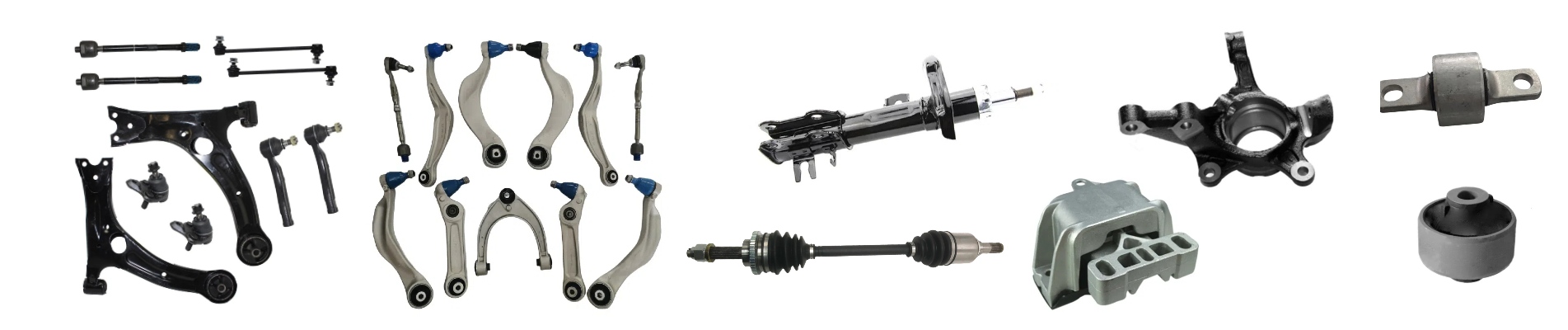
Your car’s suspension system is the unsung hero of every smooth, safe drive. It works tirelessly behind the scenes, absorbing road bumps, stabilizing your vehicle, keeping your tires grounded, and ensuring precise steering control. Most drivers barely notice it’s there—until it starts to fail. A faulty suspension system doesn’t just ruin your ride comfort; it puts your safety, your passengers’ well-being, and even your tires and brakes at serious risk.
Every component in this system works in tandem. When one part weakens or breaks, the entire system’s performance declines—and your car’s safety drops with it.
Suspension failure never happens overnight. It sends out subtle and not-so-subtle warnings long before it fully malfunctions. Watch out for these common red flags during your daily drives.
Even minor bounces on flat roads are a clear indicator that your suspension components are worn and need inspection.
This issue worsens at high speeds and drastically increases the risk of lane drift accidents.
If every small crack in the road translates to a jolt inside your car, and even smooth pavement feels rigid and jarring, your suspension is no longer doing its job. As shocks and struts degrade, they lose their ability to cushion vibration. What was once a quiet, comfortable ride becomes stiff, bumpy, and fatiguing—especially on longer drives.
This happens because worn shocks can’t stabilize weight transfer. Beyond an uncomfortable ride, this issue extends your braking distance, making emergency stops less effective and more dangerous.
A stable car should feel firm and grounded when taking turns. If your vehicle leans heavily to one side and sways excessively during cornering, your sway bar links or bushings are likely worn out. Severe body roll reduces steering precision and can even lead to loss of control in sharp turns or windy conditions.
While poor alignment causes similar issues, uneven tire wear paired with a bumpy ride is a definitive suspension red flag. Ignoring this leads to premature tire replacement and compromised road grip.
Clunking typically signals loose or damaged ball joints, control arm bushings, or sway bar links, while squeaking usually comes from dry, worn suspension components. These noises grow louder over time as damage worsens.
You can also check your car’s stance: if one corner of the vehicle sits lower than the others, you have a broken or collapsed spring.
Suspension and steering systems work closely together. Worn suspension parts create extra friction and resistance, making your steering wheel feel stiff, tight, or delayed in response. If you notice you have to turn the wheel more than usual to change direction, your suspension likely needs service.
Minor steering wheel vibration at highway speeds is common for worn tires, but persistent, intense vibration points to suspension failure. Unbalanced shocks and worn components create constant vibration that amplifies at speeds above 40 mph, making high-speed driving stressful and unsafe.
For best results, test all four corners of the vehicle. If one corner bounces more than the others, that side has damaged suspension components.
As a general rule, have your suspension inspected every 15,000 miles, and replace shocks/struts every 50,000–100,000 miles for optimal performance.

READY FOR A SUBSCRIPTION?
SMK company supply auto parts for below car aftermarket parts: Japanese car: Toyota, Honda, Nissan, Mazda, Subaru, Mitsubishi, Suzuki, Isuzu... European car: BMW, Benz, VW, Audi, Skoda, Porsche, Maserati, Renault, Peugeot, Citroen, Fiat, Opel, Land Rover... American car: Tesla, Ford, Chrysler, Cadillac, Buick, GMC, Chevrolet, Lincoln, Fiat, Dodge, ... Korean car: Hyundai, Kia, Daewoo... Chinese car: Chery, Geely, GreatWall, Haval, BYD, Changan, JAC... We supply parts worldwide: USA, Canada, Europe, Mexico, Colombia, Korea... We are leading supplier for below auto parts: Suspension & Steering Parts(Control Arm, Steering Tie Rod, Stabilizer Link...) Tesla Aftermarket Parts. Engine Mounting/Transmission Mount SMK Auto parts is specifically designed for the automotive repair parts. Our chassis components undergo rigorous testing to easily withstand the complex and variable road conditions and climate. The products not only offer exceptional durability but also provide broad compatibility and excellent stability, ensuring long-term, reliable support for your vehicles. Many overseas clients have established long-term partnerships with us. With the continuous accumulation of customer resources, many overseas clients entrust us with the production of various types of automotive parts products. In order to meet the diversified needs of customers, we have actively expanded new product lines. We adhere to high manufacturing standards, ensuring each product meets the strict safety and durability requirements of different markets. We invite customers from worldwide to choose our products and provide stronger protection and performance upgrades for your vehicles! SMK always adhere to customer-centric, continuously improve product quality and service levels, and strive to create greater value for global customers. In the future, we will continue to adhere to the principle of “quality first, customer first” and work hand in hand with our partners to create a better future.
 IPv6 network supported