 Language
 English
 français
 Deutsch
 русский
 español
 português


What Are You Looking For?

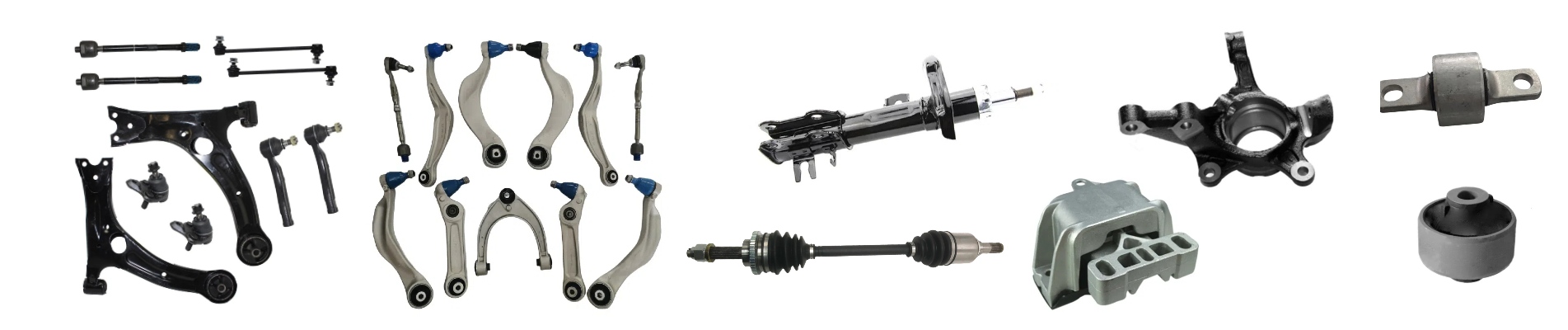
Many drivers overlook control arm bushings, a key suspension part that cushions road shocks and keeps steering stable. Once worn control arm bushings appear, your car may produce strange noises, vague steering and uneven tire wear. Let’s look at control arm bushing failure causes, warning signs and practical repair options.
Control arm bushings are rubber or polyurethane sleeves fitted between control arms and the chassis. These suspension bushings stop metal-on-metal contact and absorb vibration during driving, preserving smooth wheel movement.
Heat, oxygen and UV rays slowly harden and crack rubber. Even gentle daily use will wear out control arm bushings as mileage accumulates over years.
Potholes and bumpy roads repeatedly stretch and squeeze suspension bushings, tearing rubber and creating deep surface cracks.
Oil and grease splash onto bushings, making rubber swell, soften and break down quickly. Once contaminated, bushings cannot recover.
Heavy loads, speeding over speed bumps and frequent sharp turns add extra shear stress and speed up bushing damage significantly.
If the control arm itself is intact, swap only the worn control arm bushings. This cost-saving method keeps your original control arm in service.
Use this option when the control arm is bent or heavily rusted. New assemblies come pre-installed with fresh suspension bushings for simple, reliable fitment.
Check control arm bushings during regular chassis inspections. After replacement, perform a professional wheel alignment to restore correct wheel geometry.

READY FOR A SUBSCRIPTION?
SMK company supply auto parts for below car aftermarket parts: Japanese car: Toyota, Honda, Nissan, Mazda, Subaru, Mitsubishi, Suzuki, Isuzu... European car: BMW, Benz, VW, Audi, Skoda, Porsche, Maserati, Renault, Peugeot, Citroen, Fiat, Opel, Land Rover... American car: Tesla, Ford, Chrysler, Cadillac, Buick, GMC, Chevrolet, Lincoln, Fiat, Dodge, ... Korean car: Hyundai, Kia, Daewoo... Chinese car: Chery, Geely, GreatWall, Haval, BYD, Changan, JAC... We supply parts worldwide: USA, Canada, Europe, Mexico, Colombia, Korea... We are leading supplier for below auto parts: Suspension & Steering Parts(Control Arm, Steering Tie Rod, Stabilizer Link...) Tesla Aftermarket Parts. Engine Mounting/Transmission Mount SMK Auto parts is specifically designed for the automotive repair parts. Our chassis components undergo rigorous testing to easily withstand the complex and variable road conditions and climate. The products not only offer exceptional durability but also provide broad compatibility and excellent stability, ensuring long-term, reliable support for your vehicles. Many overseas clients have established long-term partnerships with us. With the continuous accumulation of customer resources, many overseas clients entrust us with the production of various types of automotive parts products. In order to meet the diversified needs of customers, we have actively expanded new product lines. We adhere to high manufacturing standards, ensuring each product meets the strict safety and durability requirements of different markets. We invite customers from worldwide to choose our products and provide stronger protection and performance upgrades for your vehicles! SMK always adhere to customer-centric, continuously improve product quality and service levels, and strive to create greater value for global customers. In the future, we will continue to adhere to the principle of “quality first, customer first” and work hand in hand with our partners to create a better future. Working Room Packing & Delivery Need After‑market Auto Parts or add your personal brand? We supply high‑quality chassis parts and customized services to meet your order requirements. Get A Quote →
 IPv6 network supported