1.1. Functional System-Based Classification
Propulsion System: Generates the power to move the vehicle.
Chassis System: Provides the structural framework and supports the vehicle's weight.
Suspension and Steering System: Controls the vehicle's motion and handling.
Braking System: Stops or slows the vehicle.
Electrical and Electronic System: Powers the vehicle and controls its functions.
Body and Interior System: Encloses and protects the occupants and cargo.
Exhaust System: Manages the removal of waste gases from the engine.
Transmission System: Transmits power from the engine to the wheels.
1.2. Physical Location-Based Classification
Front End: Includes parts such as the radiator, headlights, grille, and front bumper.
Under the Hood (Engine Bay): Contains the engine, transmission, battery, and related components.
Interior: Comprises seats, dashboard, steering wheel, climate control, and entertainment systems.
Exterior: Includes the doors, trunk, fenders, and rear bumper.
Undercarriage: Houses the suspension, exhaust, driveshaft, and differential.
1.3. Role and Function-Based Classification
Structural Components: Provide the vehicle's rigidity and safety, such as the frame, unibody, and pillars.
Power Generation Components: Convert fuel into mechanical energy, primarily the engine.
Power Transmission Components: Transfer energy from the engine to the wheels, including the transmission and driveshaft.
Control and Safety Components: Govern vehicle behavior and protect occupants, like the steering, brakes, and airbags.
Environmental Control Components: Maintain the interior environment, such as HVAC and lighting systems.
Passenger and Cargo Components: Enclose and carry the vehicle's occupants and goods.
2.1. Propulsion System
The heart of the vehicle, this system converts fuel into motion. It is undergoing a significant transformation with the rise of electrification.
Key Components:
Internal Combustion Engine (ICE): Converts chemical energy from fuel into mechanical energy through a series of controlled explosions (combustion).
Electric Motor: Converts electrical energy from the battery into rotational force to power the wheels.
Hybrid System: Combines an ICE with one or more electric motors to optimize efficiency and performance.
Fuel System: Delivers fuel to the engine for combustion.
Air Intake System: Supplies the engine with the oxygen needed for combustion.
Exhaust System: Removes exhaust gases from the engine.
2.2. Chassis System
The chassis is the vehicle's skeleton, providing the foundation for all other components. It supports the vehicle's weight, distributes loads, and isolates the body from road vibrations.
Key Components:
Frame: The rigid structure that supports the body and suspension. It can be a traditional ladder frame or a unibody (monocoque) structure where the body itself provides much of the strength.
Unibody (Monocoque) Structure: A modern design where the vehicle's body and chassis are integrated into a single unit, offering greater rigidity and safety.
Body-on-Frame Structure: An older design where the body sits on top of a separate, box-like frame. It is common in heavy-duty trucks and SUVs.
Subframes: Separate, lighter structures attached to the main frame that support the front or rear suspension and powertrain.
2.3. Suspension and Steering System
This system controls the vehicle's ride quality, handling, and stability, providing a smooth and controlled driving experience.
Key Components:
Suspension System:
Struts: Combine a shock absorber and a coil spring into a single unit.
Shock Absorbers (Damper): Control the movement of the springs.
Springs (Coil, Leaf, Air): Support the vehicle's weight and absorb road impacts.
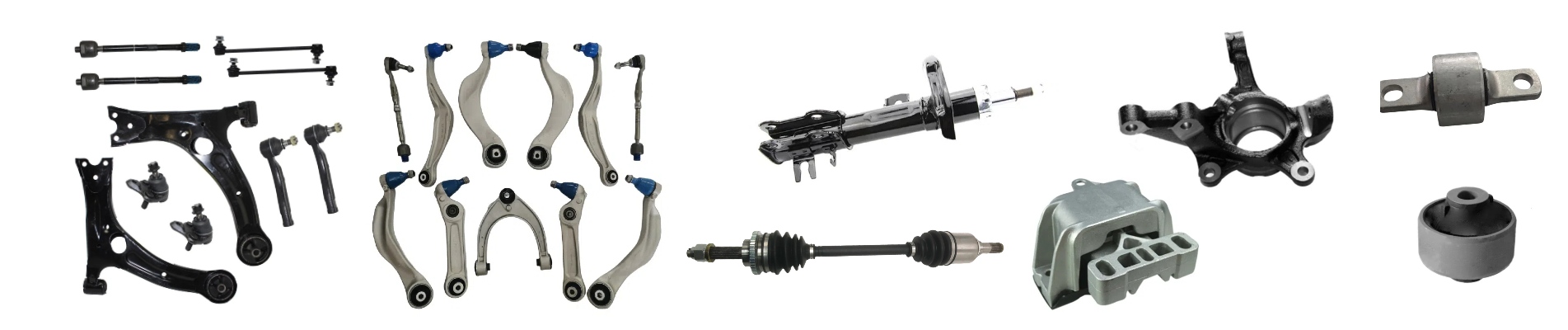
Control Arms: Connect the wheels to the vehicle's frame.
Sway Bars (Anti-roll Bars): Reduce body roll during cornering.
Steering System:
Steering Wheel: The driver's interface for control.
Steering Column: Transmits the driver's input from the wheel to the steering gear.
Steering Gear (Rack and Pinion): Converts the rotational motion of the steering wheel into the linear motion needed to turn the wheels.
Power Steering Pump: Assists the driver in turning the steering wheel, especially at low speeds.
2.4. Braking System
The braking system is a critical safety component that enables the driver to control the vehicle's speed and bring it to a stop.
Key Components:
Brake Pedal: The driver's input mechanism.
Master Cylinder: Converts the force from the brake pedal into hydraulic pressure.
Brake Lines: Transmit hydraulic fluid throughout the system.
Brake Calipers: Contain the brake pads and clamp them against the rotors.
Brake Rotors (Discs): Rotate with the wheels and are the surfaces against which the brake pads press.
Brake Pads: Friction materials that create the force needed to slow down the vehicle.
Drum Brakes: Found on the rear wheels of many vehicles, they use brake shoes that press against the inside of a rotating drum.
 Language
 English
 français
 Deutsch
 русский
 español
 português




 IPv6 network supported