 Language
 English
 français
 Deutsch
 русский
 español
 português


What Are You Looking For?
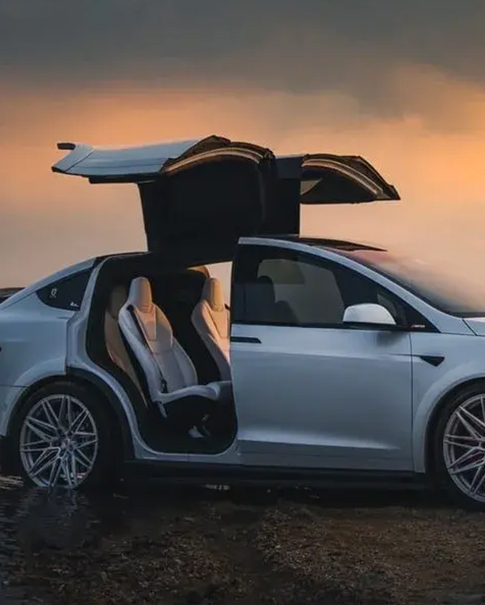
1. Engine system: disappear directly
Fuel-powered vehicleIntake manifold, exhaust manifold, three-way catalyst, turbocharger
No spark plug, turbine, three-way catalyst, oil filter element
2. Gearbox: greatly simplified
Fuel-powered vehicle
AT, DCT, CVT, MT have complex structures
There are too many transmission valve bodies, clutches, friction plates, and sensors
New energy vehicle
Most of them are single-stage reducers
Simple structure, low failure rate, and very few accessories
Only gearbox oil, bearings, oil seals, oil seal seats, etc
3. Three Electric Systems: New Large Components (Unique to New Energy)
Fuel vehicles are completely absent, and the core profit zone for new energy is:
Battery system
Battery pack, battery cell, module, BMS battery management
High voltage wiring harness, maintenance switch, fuse
Motor system
Drive motor, rotary sensor, water-cooled plate
Electric control system
Motor controller, OBC car charger
PDU high voltage distribution, DC-DC converter
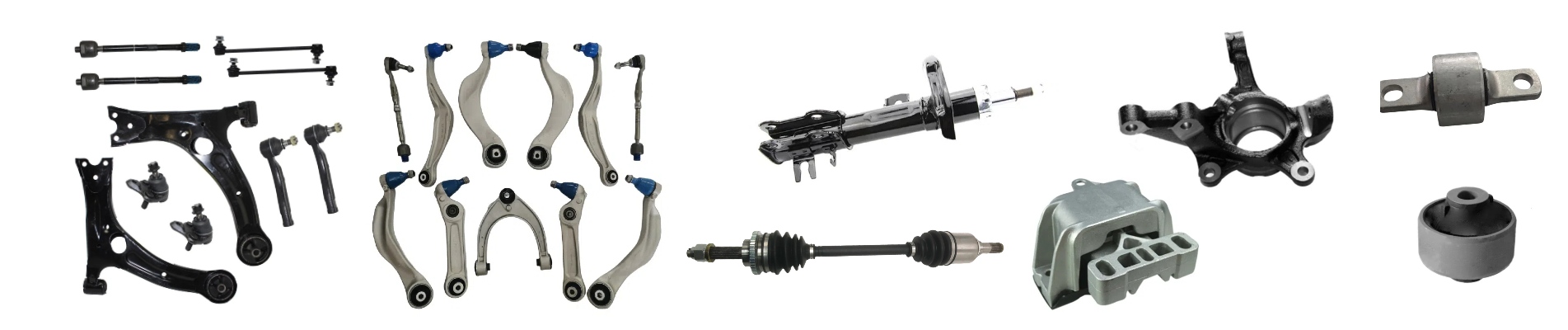
4. Chassis&Suspension: Basic universal, but with variations
Most commonly used
Lower arm, steering knuckle, shock absorber, spring, stabilizer link, bearing
Brake discs, brake pads, tires, wheel hubs
Differences in New Energy
The car is heavier and requires higher strength for shock absorbers, springs, and swing arms
Many use iBooster brakes without a vacuum booster pump
Partially using electronic steering, with a more integrated structure
5. Braking system: significant structural changes
Fuel-powered vehicle
Vacuum booster pump, vacuum pipeline, vacuum pump
Traditional ABS module
New energy
Basically, it's electronic assisted braking+ESP/IPB
No vacuum booster pump
Energy recovery is involved in braking, resulting in slower wear of brake pads
6. Air intake, exhaust and fuel system: directly cut off
Fuel-powered vehicle
Fuel tank, fuel pump, fuel rail, fuel injector, carbon canister
Air filter, throttle valve EGR、 Turbine pipeline
Exhaust pipe, muffler, three-way catalyst
New energy
none at all
Only air conditioning filter, no exhaust system
7. Cooling&Air Conditioning: Different Structures
Fuel-powered vehicle
Engine water cooling, oil cooling
The air conditioning compressor is driven by a belt
New energy
Battery thermal management (water-cooled/refrigerant direct cooling)
Multiple radiators, electronic water pumps, expansion valves
Electric air conditioning compressor

READY FOR A SUBSCRIPTION?
SMK company supply auto parts for below car aftermarket parts: Japanese car: Toyota, Honda, Nissan, Mazda, Subaru, Mitsubishi, Suzuki, Isuzu... European car: BMW, Benz, VW, Audi, Skoda, Porsche, Maserati, Renault, Peugeot, Citroen, Fiat, Opel, Land Rover... American car: Tesla, Ford, Chrysler, Cadillac, Buick, GMC, Chevrolet, Lincoln, Fiat, Dodge, ... Korean car: Hyundai, Kia, Daewoo... Chinese car: Chery, Geely, GreatWall, Haval, BYD, Changan, JAC... We supply parts worldwide: USA, Canada, Europe, Mexico, Colombia, Korea... We are leading supplier for below auto parts: Suspension & Steering Parts(Control Arm, Steering Tie Rod, Stabilizer Link...) Tesla Aftermarket Parts. Engine Mounting/Transmission Mount SMK Auto parts is specifically designed for the automotive repair parts. Our chassis components undergo rigorous testing to easily withstand the complex and variable road conditions and climate. The products not only offer exceptional durability but also provide broad compatibility and excellent stability, ensuring long-term, reliable support for your vehicles. Many overseas clients have established long-term partnerships with us. With the continuous accumulation of customer resources, many overseas clients entrust us with the production of various types of automotive parts products. In order to meet the diversified needs of customers, we have actively expanded new product lines. We adhere to high manufacturing standards, ensuring each product meets the strict safety and durability requirements of different markets. We invite customers from worldwide to choose our products and provide stronger protection and performance upgrades for your vehicles! SMK always adhere to customer-centric, continuously improve product quality and service levels, and strive to create greater value for global customers. In the future, we will continue to adhere to the principle of “quality first, customer first” and work hand in hand with our partners to create a better future.
 IPv6 network supported