 Language
 English
 français
 Deutsch
 русский
 español
 português


What Are You Looking For?

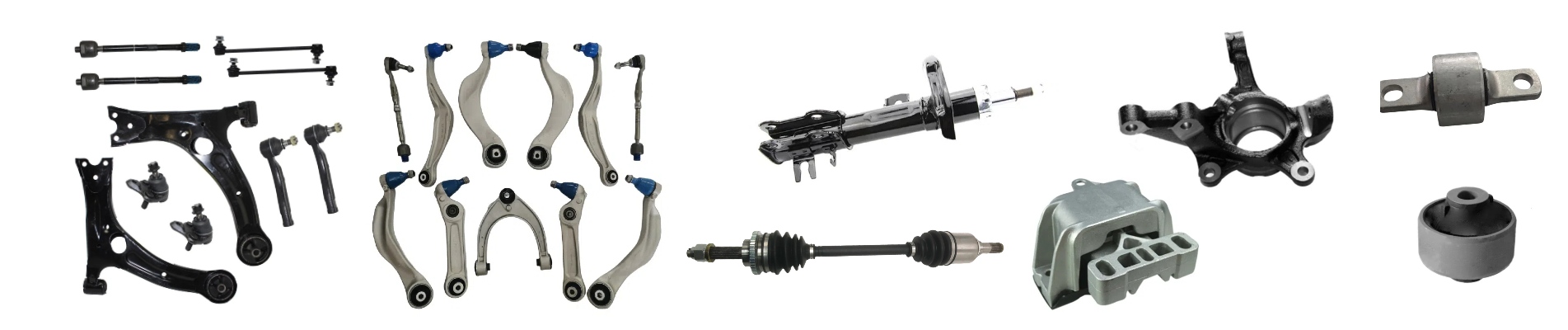
Automotive vulnerable parts refer to components that require regular inspection, maintenance, or replacement due to friction, wear, aging, fatigue, and other factors during daily vehicle use. Its lifespan is greatly affected by driving habits, road conditions, usage environment (high temperature, dust, cold, etc.), and component materials. The following is a detailed explanation of the lifespan range, replacement standards, and key precautions of common vulnerable parts according to the core system of the vehicle, taking into account practicality and professionalism, and is suitable for most household cars and common vehicle models.
1.Vulnerable parts of engine system
As the "heart" of a vehicle, the engine's vulnerable parts directly affect power output and operational stability, and special attention should be paid to wear and aging.
Lifespan: The core depends on the material, with significant differences - nickel alloy spark plugs can reach 20000 to 30000 kilometers; Platinum spark plug 60000 to 80000 kilometers; Iridium/Iridium Platinum Spark Plug 80000 to 100000 kilometers; Models with automatic start stop function or turbocharging require a 20% replacement cycle in advance due to faster wear and tear.
Replacement criteria: ① Difficulty starting, idle shaking, weak acceleration, or significant increase in fuel consumption of the vehicle; ② After dismantling and inspection, it was found that the electrodes were severely worn, had excessive carbon deposits, or had gaps exceeding 0.8-1.2mm (refer to the vehicle manual for details); ③ To achieve the recommended lifespan of the corresponding material, even if there are no obvious abnormalities, it is recommended to replace it to avoid sudden failures.
Replacement standard: ① Check during each maintenance, if the surface of the filter paper is covered with dust, oil stains, or if it is damaged or blocked, it cannot effectively filter the air; ② If the vehicle experiences a decrease in power and an increase in fuel consumption, after troubleshooting other issues, prioritize checking the air filter; ③ To achieve the recommended lifespan, even if the appearance is relatively clean, it needs to be replaced to prevent dust from entering the cylinder and damaging engine components.
Replacement criteria: ① If the timing belt has cracks, aging, looseness, or reaches the recommended service life, it must be replaced, and the tensioner and idler must be replaced at the same time; ② If there is abnormal noise, tooth jumping, or tensioner failure in the timing chain, it needs to be repaired or replaced in a timely manner; ③ If the belt breaks, it will cause serious damage to the engine and needs to be prevented in advance.
2. Vulnerable parts of the braking system (safety core, priority inspection)
The vulnerable parts of the braking system are directly related to driving safety and need to be regularly inspected for wear and tear. Replacement should not be delayed.
Lifespan: 30000 to 70000 kilometers, depending on driving habits and vehicle type - urban commuting vehicles have a mileage of 40000 to 60000 kilometers, vehicles with frequent sudden braking and running on mountain roads have a mileage of 20000 to 30000 kilometers, and new energy vehicle models can be extended to 70000 to 80000 kilometers due to kinetic energy recovery.
Replacement standard: ① Brake pad thickness ≤ 3mm (about the thickness of a coin), or worn to the point of alarm pad, causing a sharp and abnormal noise of "squeaking" when stepping on the brake; ② The braking distance has significantly increased and the brake pedal has become softer. After ruling out the brake fluid problem, the brake pads need to be replaced; ③ The wear of the front and rear brake pads is not synchronized, usually the front wheels wear faster and need to be checked and replaced separately.
Replacement criteria: ① Deep grooves (depth>1mm), cracks, or deformation of the brake disc surface, resulting in shaking when braking; ② The wear of the brake disc exceeds the limit thickness specified by the original factory; ③ If the brake pads are excessively worn and not replaced in a timely manner, resulting in serious scratches on the brake discs, the brake discs need to be replaced simultaneously.
Replacement criteria: ① Brake oil color darkens, becomes turbid, or has a water content exceeding 3% (detected by professional instruments); ② When stepping on the brake, the pedal becomes hard, the brake is weak, or there is a leakage in the brake system; ③ When the recommended lifespan is reached, it must be replaced. When replacing, the air must be thoroughly purged to avoid affecting the braking effect.
3. Fragile parts of the driving system
The vulnerable parts of the driving system affect the stability and comfort of the vehicle, and attention should be paid to wear, aging, and leakage.
Replacement criteria: ① tread pattern depth ≤ 1.6mm (wear marks exposed), or irregular wear on the pattern (uneven wear, edge gnawing); ② Cracks, bulges, and damages appear on the side of the tire, or it cannot be repaired after being pierced by nails or sharp objects; ③ If the service life exceeds 5 years, even if the pattern is deep, it needs to be replaced (rubber aging is prone to tire blowouts); ④ If the tire has been repaired more than 3 times, it is recommended to replace it to avoid the risk of tire blowout during high-speed driving.
Replacement criteria: ① If the shock absorber leaks (with oil stains on the cylinder body), or if there is weak compression or rebound, the vehicle will experience severe bumps while driving, and there will be obvious abnormal noises when passing speed bumps or bumpy roads; ② When driving at high speeds, the vehicle may experience drifting, body tilting, and severe cornering and tilting; ③ The spring of the shock absorber is fatigued and deformed, and needs to be replaced synchronously with the shock absorber to ensure the balance of the vehicle body.
Replacement criteria: ① Abnormal noise during steering, increased virtual position of the steering wheel, or inaccurate steering; ② During inspection, it was found that the ball head was loose, the rubber sleeve was aged, cracked, and detached; ③ When the vehicle is in motion, the body shakes and the tilt intensifies when cornering. After ruling out tire and shock absorber issues, it is necessary to inspect these components.
4.Vulnerable parts of electrical system
The vulnerable parts of the electrical system affect the normal use of various electronic functions of the vehicle, and attention should be paid to aging and wear and tear.
Replacement criteria: ① Difficulty starting the vehicle, cold car voltage below 12V (professional inspection), or multiple instances of power loss and inability to start; ② The battery shell bulges, leaks, or quickly loses power after charging; ③ If the service life exceeds 3 years, it is recommended to check the battery status every six months, replace it in a timely manner when the service life is reached, and avoid breaking down halfway.
Replacement criteria: ① Residue, scratches, abnormal noise, or inability to clean when wiping, affecting visibility; ② The wiper rubber strip has aged, cracked, and hardened, making it unable to tightly adhere to the windshield; ③ Before the rainy season arrives, it is recommended to check and replace it in advance to avoid affecting driving safety in rainy weather (do not use sandpaper to polish the rubber strip to avoid scratching the windshield).
Replacement criteria: ① The bulb burns out, the brightness significantly decreases, or the light flashes and dims intermittently; ② LED lights have local non illumination and abnormal color display; ③ After the brake lights and turn signals are damaged, they should be replaced immediately to avoid affecting the judgment of the following vehicle and causing traffic accidents.
5. Other common vulnerable parts
Replacement criteria: ① The air outlet becomes smaller, there is an odor (moldy or dusty), or the air quality inside the car deteriorates after turning on the air conditioner; ② The surface of the filter is covered with dust, mold, and hair; ③ Even if there is no obvious odor, it needs to be replaced to ensure the health of passengers in the car, even if it reaches the recommended lifespan.
Replacement criteria: ① Slippery start, insufficient power transmission, or jerking or abnormal noise when shifting gears; ② The clutch pedal travel increases and the rebound is weak; ③ Upon dismantling and inspection, it was found that the clutch plate was worn to the point where the rivets were exposed. It was necessary to replace it promptly and inspect the clutch release bearing.
Replacement criteria: ① The color of the transmission oil becomes darker, cloudy, or there is an odor; ② Shifting jerks, lagging, and weak acceleration. After troubleshooting other issues, it is necessary to replace the transmission oil; ③ Reach the recommended lifespan, replace in a timely manner to avoid wear and tear on internal components of the gearbox.

READY FOR A SUBSCRIPTION?
SMK company supply auto parts for below car aftermarket parts: Japanese car: Toyota, Honda, Nissan, Mazda, Subaru, Mitsubishi, Suzuki, Isuzu... European car: BMW, Benz, VW, Audi, Skoda, Porsche, Maserati, Renault, Peugeot, Citroen, Fiat, Opel, Land Rover... American car: Tesla, Ford, Chrysler, Cadillac, Buick, GMC, Chevrolet, Lincoln, Fiat, Dodge, ... Korean car: Hyundai, Kia, Daewoo... Chinese car: Chery, Geely, GreatWall, Haval, BYD, Changan, JAC... We supply parts worldwide: USA, Canada, Europe, Mexico, Colombia, Korea... We are leading supplier for below auto parts: Suspension & Steering Parts(Control Arm, Steering Tie Rod, Stabilizer Link...) Tesla Aftermarket Parts. Engine Mounting/Transmission Mount SMK Auto parts is specifically designed for the automotive repair parts. Our chassis components undergo rigorous testing to easily withstand the complex and variable road conditions and climate. The products not only offer exceptional durability but also provide broad compatibility and excellent stability, ensuring long-term, reliable support for your vehicles. Many overseas clients have established long-term partnerships with us. With the continuous accumulation of customer resources, many overseas clients entrust us with the production of various types of automotive parts products. In order to meet the diversified needs of customers, we have actively expanded new product lines. We adhere to high manufacturing standards, ensuring each product meets the strict safety and durability requirements of different markets. We invite customers from worldwide to choose our products and provide stronger protection and performance upgrades for your vehicles! SMK always adhere to customer-centric, continuously improve product quality and service levels, and strive to create greater value for global customers. In the future, we will continue to adhere to the principle of “quality first, customer first” and work hand in hand with our partners to create a better future.
 IPv6 network supported