 Language
 English
 français
 Deutsch
 русский
 español
 português


What Are You Looking For?

A driving school’s Volkswagen Santana pulled into the shop. As the coach stepped out, he told the mechanic, “The car ran perfectly fine this morning, but something’s wrong this afternoon. The AC isn’t blowing cold air like it was earlier, lots of warning lights lit up on the dashboard, and the steering wheel even locked up just now—it’s really strange.”
The mechanic asked the coach to turn on the AC while he inspected the engine bay. The low-pressure AC pipe felt cold, meaning the compressor worked fine. But the cooling fan spun too slowly; it should run at high speed to dissipate heat when the AC is on. The engine also shook violently.
Glancing at the dashboard, the mechanic saw plenty of yellow and red warning lights illuminated.
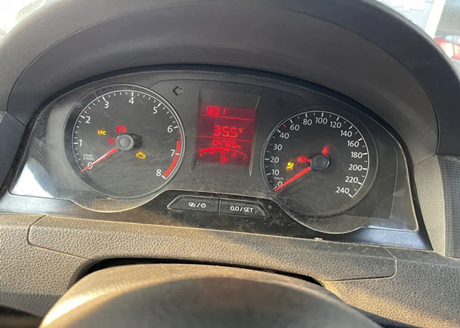
Connect the diagnostic computer, and the trouble codes shown in the picture appear. The mechanic explained all the faults indicate low voltage. The vehicle’s power supply comes from the battery and the alternator, and the battery gets its charge from the alternator. It is highly likely that the alternator is defective.
The mechanic grabbed a multimeter right away. With the engine running, he connected its probes to the positive and negative terminals of the battery to test the charging voltage of the alternator. The normal reading should be above 13 volts, yet the measured voltage was only 10 volts. What does this mean?
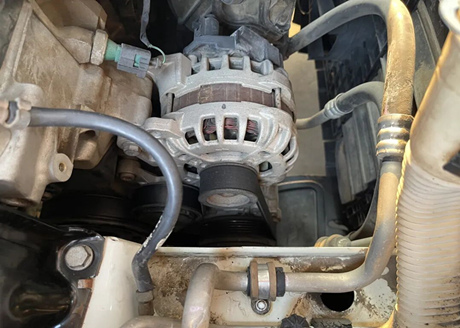
It must be the faulty alternator!” the mechanic said. He then decided to remove the alternator, as shown in the picture below.
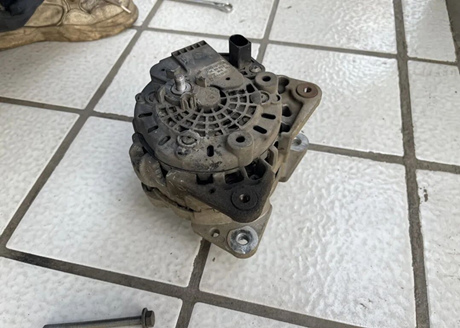
The mechanic said he would take the alternator apart to show the driving coach exactly where the fault lay. The picture below shows him removing the rear plastic cover of the alternator.
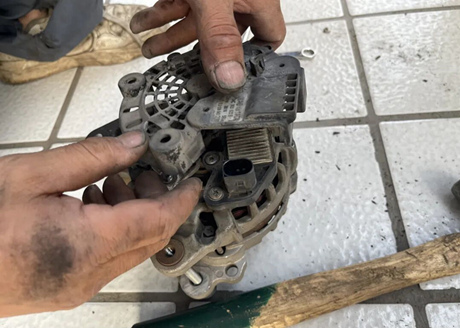
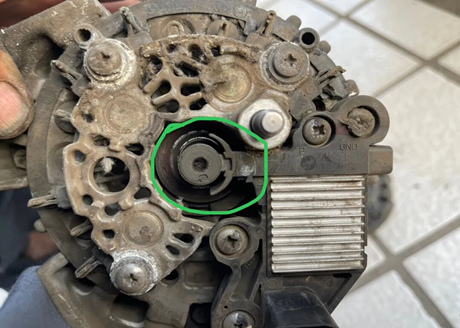
After taking off the rear plastic cover, the faulty component came into view, marked in the green area in the picture below—the contact point between the carbon brushes and the rotor. The mechanic pointed out abnormal wear on both the rotor shaft and the carbon brushes.
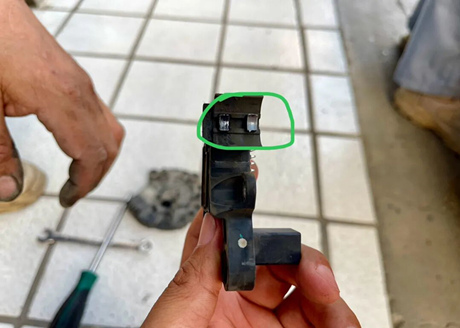
The carbon brushes suffered abnormal wear, as seen in the picture below. The one on the left is almost completely worn down.
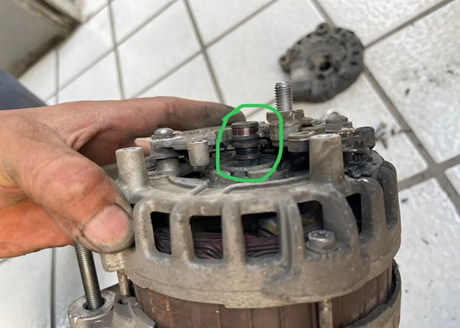
Check the contact area between the rotor and carbon brushes: deep grooves have formed from wear. The mechanic explained that if this rotor surface were less worn, only replacing the carbon brushes would suffice, but now the entire assembly needs to be changed.
“Does that mean a brand-new alternator has to be fitted?” the coach asked.
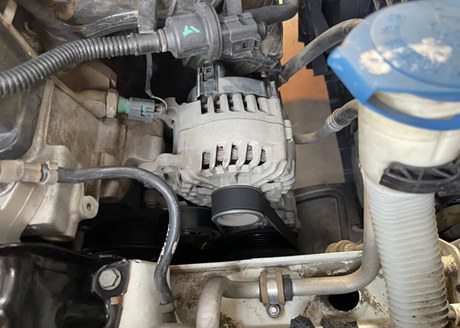
The mechanic then started the engine and cleared all the trouble codes, and everything worked perfectly afterward. Seeing this result, the coach said he never realized how vital the alternator was and that insufficient charging could trigger so many malfunctions.
The mechanic explained: "When your car first arrived, the alternator had already stopped generating electricity even though it looked intact. The cooling fan, blower motor, ignition system and dashboard lights all rely on power from the alternator. Back then they ran solely on power stored in the battery, which was far from enough. As the battery drained, numerous warning faults popped up. Now that the alternator charges properly, all issues are resolved."

READY FOR A SUBSCRIPTION?
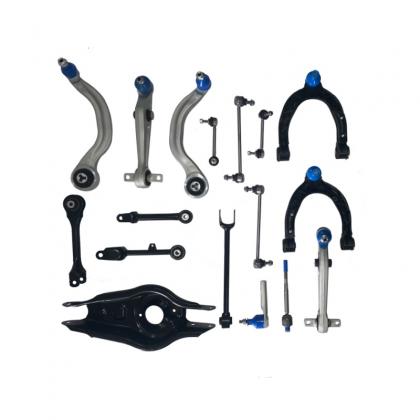
SMK company supply auto parts for below car aftermarket parts: Japanese car: Toyota, Honda, Nissan, Mazda, Subaru, Mitsubishi, Suzuki, Isuzu... European car: BMW, Benz, VW, Audi, Skoda, Porsche, Maserati, Renault, Peugeot, Citroen, Fiat, Opel, Land Rover... American car: Tesla, Ford, Chrysler, Cadillac, Buick, GMC, Chevrolet, Lincoln, Fiat, Dodge, ... Korean car: Hyundai, Kia, Daewoo... Chinese car: Chery, Geely, GreatWall, Haval, BYD, Changan, JAC... We supply parts worldwide: USA, Canada, Europe, Mexico, Colombia, Korea... We are leading supplier for below auto parts: Suspension & Steering Parts(Control Arm, Steering Tie Rod, Stabilizer Link...) Tesla Aftermarket Parts. Engine Mounting/Transmission Mount SMK Auto parts is specifically designed for the automotive repair parts. Our chassis components undergo rigorous testing to easily withstand the complex and variable road conditions and climate. The products not only offer exceptional durability but also provide broad compatibility and excellent stability, ensuring long-term, reliable support for your vehicles. Many overseas clients have established long-term partnerships with us. With the continuous accumulation of customer resources, many overseas clients entrust us with the production of various types of automotive parts products. In order to meet the diversified needs of customers, we have actively expanded new product lines. We adhere to high manufacturing standards, ensuring each product meets the strict safety and durability requirements of different markets. We invite customers from worldwide to choose our products and provide stronger protection and performance upgrades for your vehicles! SMK always adhere to customer-centric, continuously improve product quality and service levels, and strive to create greater value for global customers. In the future, we will continue to adhere to the principle of “quality first, customer first” and work hand in hand with our partners to create a better future. Working Room Packing & Delivery Need After‑market Auto Parts or add your personal brand? We supply high‑quality chassis parts and customized services to meet your order requirements. Get A Quote →
 IPv6 network supported