 Language
 English
 français
 Deutsch
 русский
 español
 português


What Are You Looking For?

News
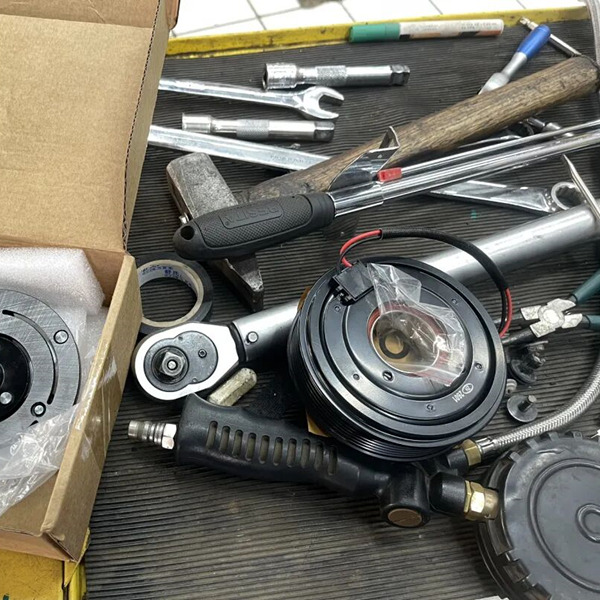
As temperatures keep rising, driving without functional air conditioning is simply unbearable. Shortly after, a Chery Tiggo 8 arrived at the workshop. The vehicle owner complained that the AC suddenly stopped cooling, with only hot air blowing out from the air vents, making driving nearly impossible in such scorching weather! After receiving the vehicle, the mechanic looked up information via the VIN and confirmed it was a 2020 Chery Tiggo 8 290TGDI Automatic Elite equipped with a 1.6T engine. This model has a well-known common fault: loss of AC cooling caused by a damaged AC compressor coil. The mechanic opened the engine hood and asked the owner to switch on the air conditioning inside the cabin. Using a flashlight, he inspected the compressor. Only the compressor pulley was spinning. A multimeter test showed the coil resistance read zero, confirming the coil failure. To achieve a thorough and reliable repair, the mechanic recommended replacing the complete AC compressor clutch three-piece kit, which only costs a few hundred yuan. The owner agreed to the repair. This vehicle was manufactured in 2021 and has been on the road for five years. As shown on the instrument cluster, the total mileage stands at just 80,000 km. Its average fuel economy is reasonable at 7.4 L/100 km. Looking into the engine bay, the compressor is mounted at the lower left side. It relies on the drive belt to transmit power, so the mechanic first needs to remove the belt. The vehicle is then lifted up as shown in the picture. Let’s take a quick look at the undercarriage. There is no skid plate fitted underneath the engine and transmission. The chassis is somewhat dirty, yet there are no signs of oil or coolant leaks. Looking at the middle section of the undercarriage, it is protected by undercoating. There are no signs of rust, so it remains in fairly good condition. Looking at the rear section of the undercarriage, a spare tire is fitted at the tail. The rear suspension adopts a multi-link independent suspension. Inspection shows all components are in good condition. After inspecting the undercarriage, we continue repairing the fault. To remove the AC compressor clutch three-piece kit, the right front wheel and the small lower liner guard on the right front inner fender need to be taken off, allowing access for disassembly from the side. As shown in the picture, the fixing bolts outside the compressor pressure plate have been removed. Due to rust, the suction disc is tightly secured on the intermediate shaft. Rust remover and penetrating oil are sprayed first to loosen it. After removing the clutch pressure plate, the pulley assembly becomes visible. As shown in the picture, here is the comparison between the new and old clutch suction discs. Once the pulley assembly is removed, the internal electromagnetic coil can be seen. This damaged component fails to generate magnetism to attract the clutch pressure plate when energized. The electromagnetic coil is relatively easy t...
Read More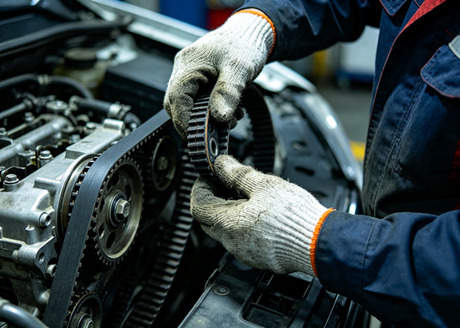
Early in the morning, the mechanic received a roadside assistance call from a long-time customer. The vehicle owner complained that the engine struggled to start and had no idea what caused the issue. The mechanic headed out with the tow truck to provide rescue service. When turning the ignition key, the engine indeed failed to start. He quickly spotted unusual symptoms: the engine made a hollow sound while cranking. The starter motor seemed to spin freely, with no sign of combustion. Warning lights also lit up on the dashboard. Drawing on years of repair experience, the mechanic suspected an issue with the engine timing system, most likely a faulty timing belt. Since he did not bring sufficient tools onsite, he towed the vehicle back to the workshop for further inspection. The owner grew worried and wondered what problems could arise with the timing belt. The mechanic asked whether the timing belt had ever been replaced. The owner replied it had never been serviced, and the car had already covered 150,000 kilometers. After towing the vehicle back to the shop, the mechanic removed the timing system side cover and pulled out the timing belt, as shown in the picture below. The belt had snapped completely. Judging by how the belt failed, the break line was not clean and even. Take a closer look at the inner surface of the belt, it is constructed with special cords embedded in rubber. When bending the inner side of the timing belt by hand, obvious aging cracks can be seen on these belt teeth. After seeing the snapped timing belt, the vehicle owner asked the mechanic why the belt broke all of a sudden. The mechanic explained: “Your Lynk & Co is fitted with a three-cylinder engine. The manufacturer recommends timing belt replacement at 100,000 kilometers or 6 years, whichever comes first. Your vehicle has hit 150,000 km now, far exceeding the recommended service interval. Moreover, a timing belt does not necessarily break under acceleration, deceleration or idle conditions — failure can happen at any time without warning.” The owner then asked if simply replacing the timing belt would fix the issue. “That won’t work,” the mechanic replied. “Once the timing belt snaps, the pistons are likely to collide with the valves and bend them. Bent valves cannot seal properly, resulting in low cylinder compression. The engine will be unable to run, so we have to remove the cylinder head for repairs.” After hearing this, the owner felt regretful. The mechanic had advised replacing the timing belt last year, but the owner decided to put it off. He never expected the belt to snap abruptly. If your vehicle is equipped with an engine using a timing belt, you must maintain the timing system in accordance with the manufacturer’s specifications. Replace the belt when it is due. If the timing belt snaps unexpectedly, you will face extremely high repair costs.
Read More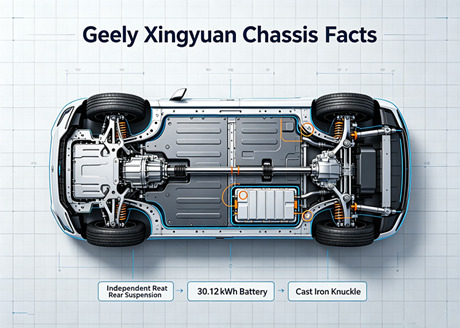
A Geely Xingyuan was driven by a sales consultant to the workshop for pre‑delivery inspection. The soon‑to‑be owner wanted to take a look at the undercarriage. Taking this chance, let’s examine its chassis and figure out why it boasts impressive sales volumes and multiple sales championship titles. The car owner asked: “What brand are the tires? How do I check the tire size?” The technician replied: “Look for the word LINGLONG on the tire sidewall — that’s the tire brand. The number sequence 205/60 R16 printed on the sidewall stands for the tire size.” Then the owner asked another question: “People say tire production date matters a lot. Where can I find it?” Pointing to a group of letters and numbers on the tire, the technician explained: “Check the last four‑digit number: 2526. This is the production date code used for nearly all tires. 25 means the 25th week, and 26 stands for the year 2026. Based on this code, this tire was manufactured at the end of June this year, practically brand‑new.” The vehicle is lifted up for chassis inspection. Full underbody covers run from front to rear, delivering an exceptionally flat undercarriage. According to the technician, all Geely Xingyuan trims adopt rear‑wheel‑drive layout. It is fitted with MacPherson independent suspension at the front and multi‑link independent suspension at the rear. This image shows the front section of the chassis. A protruding horizontal steel tube sits in the middle of the front underbody cover, offering certain protection for the battery pack located behind it. The lower control arm is made of single‑layer stamped steel plate. The lower ball joint and lower control arm are constructed as an integrated unit. Thanks to the rear‑wheel‑drive configuration, there is no drive axle on the front‑wheel side. Looking at the rear section of the chassis, what appears to be four cylindrical connecting rods is actually three. The middle one is the drive shaft. The technician mentioned that most vehicles in this segment come with a torsion‑beam non‑independent rear suspension. By contrast, the Geely Xingyuan features a rare independent rear suspension across the entire lineup, giving it highly competitive hardware specifications. Spotting rust on the rear steering knuckle, marked in the red area in the picture, the car owner asked: “Why is there rust on a brand‑new car? Will this cause any problems?” The technician explained that the steering knuckle is made of cast iron. Surface rust after contact with water is a normal occurrence. It is only superficial rust and there is no need for concern at all. Let’s check the specifications of the battery pack as shown in the picture. It has a rated energy of 30.12 kWh for the 310‑km range variant and weighs 227 kilograms. The battery was manufactured only more than ten days ago with a very recent production date. The car owner was quite satisfied after seeing these details. That concludes our overview of the Geely Xingyuan’s chassis, and it delivers r...
Read More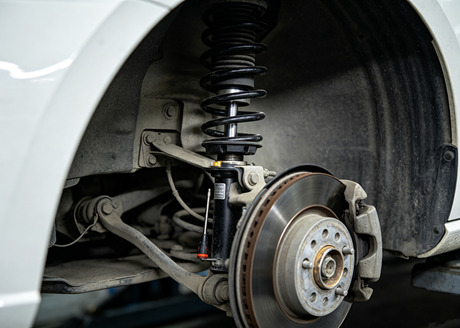
In the morning, a Volkswagen Lamando pulled into our shop for a chassis abnormal noise inspection. This is the 2017 model, manufactured in 2016. While our technician is troubleshooting the strange chassis noise, let’s take a look at its overall vehicle condition. As shown in the picture, the odometer reads 117,000 kilometers. That averages out to 10,000 kilometers per year, typical mileage for a family‑used car. Moving on to the engine bay. As shown in the photo, it stays remarkably clean with no signs of oil or coolant leaks. Under the hood sits the EA211‑series 1.4T engine. According to the owner, the power unit has not given him any major trouble so far. Still, our technician reminds us to keep an eye on the timing belt condition. Replace it when due. A snapped timing belt can lead to severe engine damage. We drive the vehicle onto the lift and raise it to inspect the chassis. As shown in the picture, the bottom of the engine and transmission is covered by a large plastic undertray, and the subframe adopts a half‑frame design. Let’s check the lower control arm. It is made of single‑layer stamped steel plate, and the lower control arm ball joint can be removed separately. We inspect all components of the front suspension. As shown in the picture, the conditions of the tie rod end, outer CV joint, lower control arm ball joint and shock absorber are all in good shape. We examine the front section of the front suspension. The stabilizer link is in decent condition, with no abnormal play when shaken by hand. The brake caliper also shows excellent working condition upon inspection. Now take a look at the rear section of the suspension. It adopts a multi‑link independent suspension. Compared with the latest‑generation Lamando, its structure looks relatively crude, and the underbody cover offers incomplete protection. A 50‑liter fuel tank sits at the front of the rear subframe, and there are barely any scratch marks on its bottom surface. The subframe is rigidly bolted directly to the vehicle body. It would perform better if connected via rubber bushings. Minor rust spots can be seen on the welded joints. According to our technician, this rust does not cause functional issues. Looking at the structure of the rear suspension, it follows Volkswagen’s familiar layout, consisting of three transverse control arms and one longitudinal trailing arm. The steering knuckle, along with these arms, is built from steel material. All these components pass inspection and are in proper working condition. That wraps up our condition review of this 2017‑model VW Lamando. Overall, the vehicle is in fair shape. It came to our shop for chassis abnormal noise diagnosis and repair. After thorough checking, our technician confirmed the fault lies with the right‑front shock absorber top mount.
Read More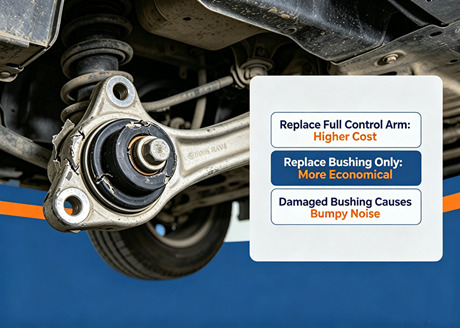
We’ve just arrived at the repair shop. An older‑looking Toyota RAV4 is on the lift, and the mechanic is removing the left and right lower control arms. The issue is badly torn control arm bushings, which cause rattling noises when driving over bumpy roads. Does this mean both complete lower control arms need to be replaced? The mechanic says the worn‑out bushings can be swapped out individually, which cuts costs significantly compared to installing full control arm assemblies. While the mechanic replaces these control arm bushings, let’s take a closer look at the overall condition of this Toyota RAV4. Looking at the dashboard, the total mileage reads 277,000 kilometers. This vehicle was manufactured in 2010. For a 16‑year‑old car, this mileage falls within the normal range for a household‑used vehicle. Opening the engine bay, we find the 1AZ‑FE 2.0‑liter naturally aspirated engine. There is minor oil seepage from the valve cover. No other obvious faults are spotted. The owner has kept up with solid routine engine maintenance, and worn‑out components have been replaced in a timely manner. Looking underneath the chassis, a metal skid plate is fitted beneath the engine and transmission, and its two rear mounting screws have already been removed. Both left and right lower control arms have been taken off, while the lower ball joints remain attached to the bottom of the steering knuckles. Let’s examine the two removed lower control arms. Each arm comes with two distinct bushings. The yellow‑marked area indicates the longitudinal bushing, and the red‑marked area stands for the lateral bushing. These two parts are exactly what will be replaced in this repair. In the past, when these two bushings failed, mechanics would mostly replace the entire lower control arm, leading to relatively high repair costs. Replacing the bushings separately helps cut down repair expenses significantly. Take a look at the large longitudinally mounted bushing, as shown in the picture below. The red arrow points to the outer metal sleeve of the bushing, and the orange arrow marks its inner metal sleeve. The mounting bolt runs through the inner metal sleeve to fasten it to the subframe. Rubber material sits between these two metal sleeves, and the rubber is now heavily torn. Looking at the front section of the chassis, most components are made of steel. Apart from minor surface rust, everything else is in good condition. The body panel material holds up well with zero rust formation. Moving to the middle section of the chassis, the large steel fuel tank with a 60‑liter capacity sits on the right side. The exhaust pipe runs along the left, and the central area provides reserved space for the 4‑wheel‑drive drive shaft. Looking at the rear section of the chassis, it features a multi‑link independent suspension. Upon inspecting the rear suspension, all components are in decent condition, and the bushings at the connecting points remain in fairly go
Read More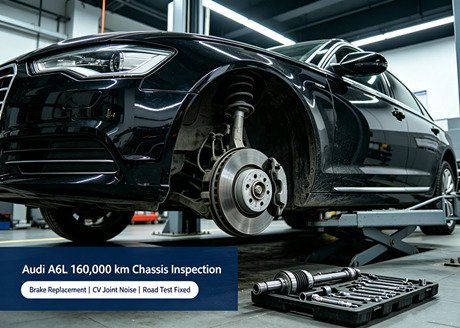
Yesterday at the repair shop, I watched technicians working on a 2016 Audi A6L with 160 000 km on the odometer. The vehicle was nearly finished. Once new tires are fitted and the test drive passes, the car will be ready for hand‑over. Used replaced parts sit nearby. Three groups of old components are removed. First are the brake rotors. Both front‑wheel brake rotors have been replaced. High‑speed brake pedal vibration occurred due to uneven rotor surfaces. Previously resurfaced, the rotors had reached their wear limit, so brand‑new brake rotors are installed this time. The second group includes outer CV joints and CV joint boots. Both left and right outer CV joints have been replaced. The failure symptom is typical: clicking noises when the steering wheel is turned to full lock. The root cause is excessive clearance between the inner steel balls and raceways of the outer CV joints. The third group is the brake pads, as shown in the picture below. These brake pads are of poor quality; material flakes off easily from the edges when scratched. Brand‑new brake pads are fitted directly. Besides, the felt‑style underbody shield at the bottom of the transmission has also been replaced with a new one, as shown in the picture below. We also take a look at the front suspension. It adopts a five‑link independent suspension, and all main parts are made of aluminum alloy. The new outer CV joints and CV joint boots have been installed. Other parts of the front suspension are inspected and in good condition with no immediate issues. At the upper section of the front suspension are two small sway bar links, also made of aluminum alloy. Looking at the middle section of the chassis, all required underbody shields are in place. The picture below shows the vehicle body at the front of the fuel tank. It looks like oil contamination, but the technician explained it is not. It is special anti‑corrosion wax injected during vehicle manufacturing. As service time goes by and temperature changes, part of the anti‑corrosion wax melts. The flowing liquid wax picks up dust and appears like an oil leak, and this condition causes no functional issues. Looking at the rear section, it features a trapezoidal multi‑link independent suspension, and most components are made of aluminum alloy. After inspection, the chassis condition of this Audi A6L is fairly good. Especially the rear chassis remains original factory condition with no further repair requirements. Then the technician performed a road test. All previous faults are gone and have been perfectly resolved.
Read More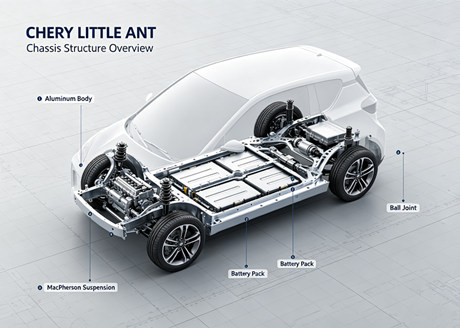
In the morning, a used Chery Little Ant arrived at the shop. The owner of this second‑hand compact EV wanted to get a close look at its chassis condition. The technician commented that the Little Ant boasts a solid chassis. Put into mass production back in 2017, it is built on the LFS all‑aluminum lightweight EV platform, marking China’s first mass‑produced micro EV with an all‑aluminum body. Its core chassis hardware has remained largely unchanged since production launch. It features three major strengths: rear‑wheel‑drive layout, four‑wheel independent suspension and an all‑aluminum body frame. As shown in the picture below, here is the condition of the rear chassis section. Its rear suspension adopts MacPherson independent suspension, which is quite rare for this type of vehicle. As shown in the picture below, its structure closely resembles that of a front suspension. Four connectors for the wiring harness are located at the rear of the battery pack. Looking at the front part of the chassis, the underframe is made of aluminum alloy, paired with MacPherson independent suspension. Inspect the front suspension. Its current condition is fairly good. There are no major issues, apart from slight looseness on the lower control arm ball joint. That covers the overall chassis condition, which is in pretty good shape. When talking about body materials, the technician pulled up photos saved in his phone gallery for the vehicle owner to view, as shown in the picture below. The outer skin of the front left door has been removed, revealing the inner aluminum‑alloy frame. The technician said the body frame of the Chery Little Ant is mostly constructed from aluminum alloy, a one‑of‑a‑kind feature among vehicles in its class. That finishes our inspection of the chassis on this used Chery Little Ant. The car owner is quite satisfied with its condition and feels he made a good choice buying this second‑hand vehicle.
Read More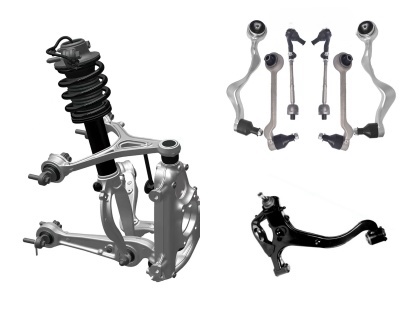
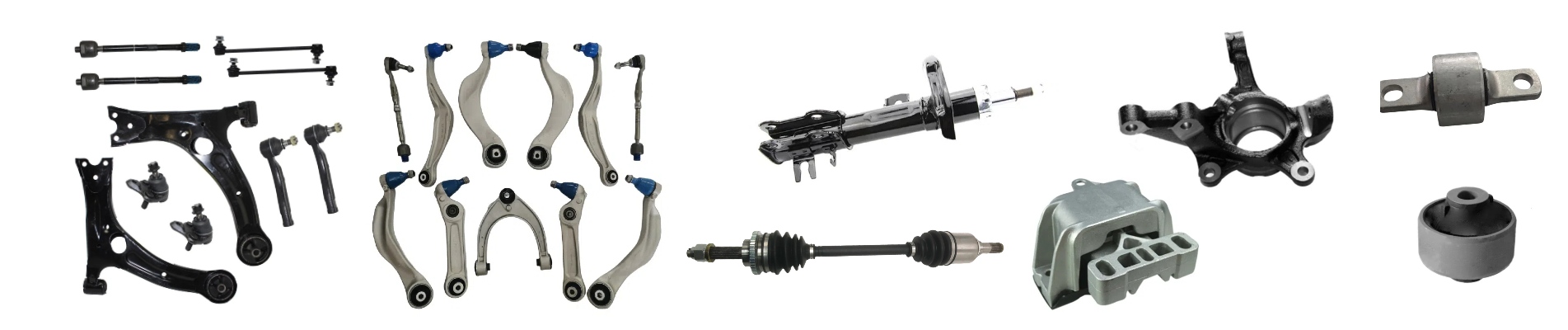
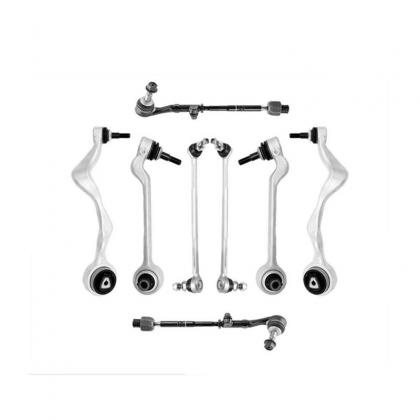
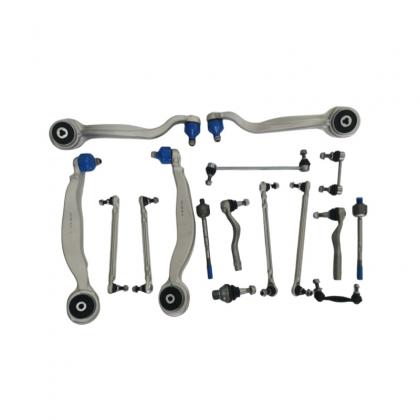
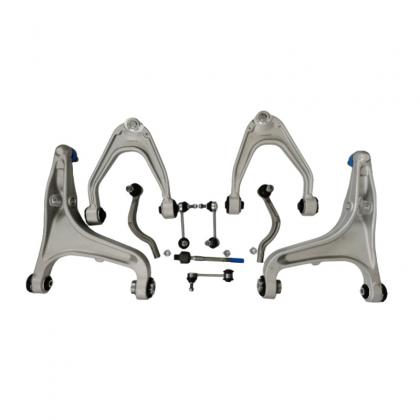
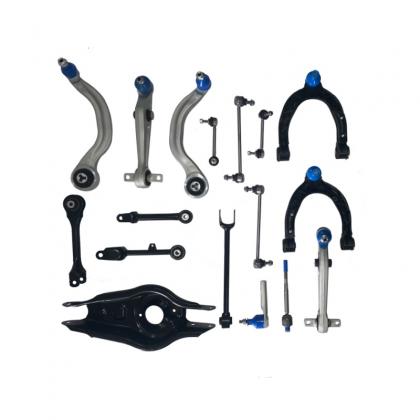
Discover the secret to keeping your suspension parts in optimal condition with SMK suspension and steering parts which designed to provide unparalleled protection and longevity for your suspension system, this innovative product is here to revolutionize your driving experience. We all know the importance of a well-maintained car suspension system. It ensures smooth rides, enhanced stability, and above all, keeps you safe on the road. Now, with SMK suspension and steering parts, maintaining a healthy suspension has never been easier. SMK suspension and steering parts is specifically engineered to extend the lifespan of your suspension components, such as control arms and bushings. Its advanced formula provides a protective shield that effectively prevents unnecessary wear and tear caused by road debris, moisture, and other damaging factors. Say goodbye to costly repairs and hello to a smoother, safer, and more enjoyable drive. When it comes to control arms and bushings, timely replacement is crucial. With SMK suspension and steering parts, you can identify any signs of damage or wear and take immediate action. By replacing worn-out components promptly, you not only prevent further damage but also ensure optimum performance and safety on the road. Don't compromise your safety by driving with worn suspension parts. Get the peace of mind you deserve with SMK suspension and steering parts. Experience the difference as you navigate sharp turns effortlessly and enjoy a comfortable ride that feels like floating on a cloud. Incorporate SMK suspension and steering parts into your regular maintenance routine and witness the impressive results firsthand. It's time to prioritize your suspension system and give it the care it deserves. Invest in SMK suspension and steering parts today and unlock the true potential of your suspension system. With its advanced technology and superior performance, you can now drive with confidence, knowing that your suspension is protected and your journeys are smoother than ever before. Remember, a healthy suspension system not only enhances your driving experience but also ensures the safety of you and your loved ones. Don't wait until it's too late. Choose SMK suspension and steering parts and embark on a journey of unparalleled performance and longevity. Drive with confidence. Drive with SMK suspension and steering parts. Both Front and Rear Upper and Lower Control Arm Ball Joint, Steering Tie Rod, Sway Bar Links, Let's drive in safe.
Read More
READY FOR A SUBSCRIPTION?
SMK company supply auto parts for below car aftermarket parts: Japanese car: Toyota, Honda, Nissan, Mazda, Subaru, Mitsubishi, Suzuki, Isuzu... European car: BMW, Benz, VW, Audi, Skoda, Porsche, Maserati, Renault, Peugeot, Citroen, Fiat, Opel, Land Rover... American car: Tesla, Ford, Chrysler, Cadillac, Buick, GMC, Chevrolet, Lincoln, Fiat, Dodge, ... Korean car: Hyundai, Kia, Daewoo... Chinese car: Chery, Geely, GreatWall, Haval, BYD, Changan, JAC... We supply parts worldwide: USA, Canada, Europe, Mexico, Colombia, Korea... We are leading supplier for below auto parts: Suspension & Steering Parts(Control Arm, Steering Tie Rod, Stabilizer Link...) Tesla Aftermarket Parts. Engine Mounting/Transmission Mount SMK Auto parts is specifically designed for the automotive repair parts. Our chassis components undergo rigorous testing to easily withstand the complex and variable road conditions and climate. The products not only offer exceptional durability but also provide broad compatibility and excellent stability, ensuring long-term, reliable support for your vehicles. Many overseas clients have established long-term partnerships with us. With the continuous accumulation of customer resources, many overseas clients entrust us with the production of various types of automotive parts products. In order to meet the diversified needs of customers, we have actively expanded new product lines. We adhere to high manufacturing standards, ensuring each product meets the strict safety and durability requirements of different markets. We invite customers from worldwide to choose our products and provide stronger protection and performance upgrades for your vehicles! SMK always adhere to customer-centric, continuously improve product quality and service levels, and strive to create greater value for global customers. In the future, we will continue to adhere to the principle of “quality first, customer first” and work hand in hand with our partners to create a better future. Working Room Packing & Delivery Need After‑market Auto Parts or add your personal brand? We supply high‑quality chassis parts and customized services to meet your order requirements. Get A Quote →
 IPv6 network supported