 Language
 English
 français
 Deutsch
 русский
 español
 português


What Are You Looking For?

News
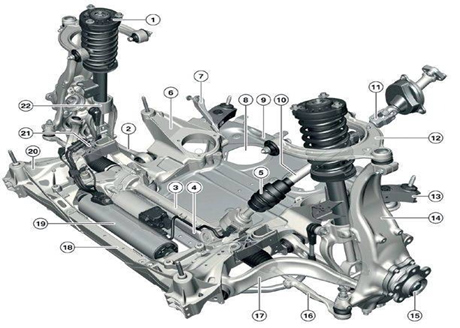
In general, there is a significant difference in chassis structure among different price levels of car models, and you get what you pay for. Accustomed to the chassis of 100000 level car models, this time let's take a look at the chassis structure of a car that was once priced at 400000 level. What are the special features of its chassis structure! Two days ago, a 2019 facelifted BMW 525Li arrived at the store. The new car was priced at over 400000 yuan at the time. The driver said that during engine maintenance a few days ago, they found that one of the radiator pipes of the turbocharger was leaking antifreeze and needed to be replaced with a new pipe. It has now been replaced and is located below the orange arrow in the following picture. The master took out the old water pipe that had been replaced and showed it to me, as shown in the picture below. The left part of this pipe is made of rubber and plastic material, and the right part is made of metal material. The location where the antifreeze leaked is their joint point, with a lot of antifreeze scale. The master said that this type of water pipe can also be repaired, but the difficulty is relatively high and there are certain risks. It is better to replace the water pipe with a new one. After replacing the water pipe, the master lifted the car and observed the water pipe from the bottom. At this point, the protective plates at the bottom of the engine and gearbox had been removed. As shown in the picture below, aluminum alloy material was everywhere. The front suspension is a double wishbone independent suspension, both made of aluminum alloy material. The master said that for models in this price range, the majority of chassis materials are aluminum alloy. The steering knuckle is made of aluminum alloy material, and the two support arms connected at the lower part are similar to the fork arms connected at the upper part, so this type of suspension is also called a double fork arm. Audi and Mercedes Benz in the same price range are basically constructed in this way. Looking at the rear, the rear wheels are the driving wheels, and the differential is installed on the subframe. It is a five link independent suspension type, of which four are made of steel and the top one is made of aluminum alloy. Looking at the rear subframe, it is made of all aluminum alloy material, which looks quite thick. As shown in the figure below, this is a removed lower protective plate made of aluminum alloy, which protects the lower part of the bumper from the engine position. This smaller guard plate is installed under the engine, with the plastic guard plate in the middle facing the oil drain screw position of the engine. These two original car protective panels are quite thick, which to some extent reduces the weight of the entire vehicle. After installing the protective plate, as shown in the figure below, we can see that the protection of the protective plate is quite comprehensive, and the overall chassis is ...
Read More
Approaching noon, I entered the store with a Buick Verano, a 2015 three box 15S automatic drive model. The owner purchased it in 2016 and it has been a full 10 years since then, but the total mileage is not much, just 40000 kilometers, averaging only about 4000 kilometers per year. The car owner said he doesn't usually drive very much, and after this maintenance, he will have to leave it at home for at least half a month before driving again. This time, we will take photos taken during the inspection by the master to see what the condition of this car, which has been around for 40000 kilometers for 10 years, looks like. Open the engine hood, the overall condition is good. The technician pulled out the oil dipstick to measure, and the oil level was at the middle scale, which is considered normal. As for brake fluid and antifreeze, the car owner himself understands the car and says he doesn't care for them temporarily. Lift up the car. The original car had a plastic protective plate, which was not fully protected. The owner installed an iron protective plate themselves, and reserved holes for the oil drain screw and oil filter. The car owner said that the car was already priced at 150000 yuan when it landed, and now it's not very valuable. The master said that the prices of joint venture cars ten years ago were indeed not cheap, but the materials used were decent. Look at the subframe, which is made of aluminum alloy material. The car owner said that the chassis has not been touched and is basically in its original state, with only two front tires replaced. Check the front suspension, the front steering knuckle is also made of aluminum alloy material, and there are no problems with the lower arm ball joint, tie rod ball joint, small connecting rod, and shock absorber. Looking at the middle part of the chassis, it is very in line with the style of American cars, quite bold, without protective plates. The owner said that the chassis armor was sprayed after buying the car. Looking at the rear suspension, the torsion beam non independent suspension with Watt linkage was checked for the status of all components and there were no issues. The master said that the two rear tires are still the original car tires, and the number 1316 indicated by the arrow indicates that they were produced in the 13th week of 2016, a full 10 years ago, with many side aging cracks. The tread pattern is still very obvious, as shown in the following picture, and the grooves are relatively deep. The master said that the depth of the tire pattern is closely related to the mileage. The mileage of the car is only 40000 kilometers, but due to the long time, it is still recommended that the owner replace it. When checking the tires, the owner asked why the tire pressure is so high now? The master said that the reason for thermal expansion and contraction is that when the temperature is high, the air pressure inside the tire will naturally increase. I can let it go for you. The above ...
Read More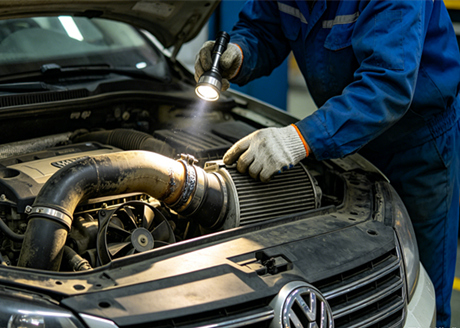
A 2012 Volkswagen Magotan was brought to the shop. The owner stated that there were no issues with the engine compartment before the vehicle inspection, yet a sharp humming noise emerged right after the inspection. The technician opened the engine hood and asked the owner to start the engine. The abnormal noise was clearly audible, coming from the front section of the engine. After a quick inspection, the technician told the owner to turn off the engine immediately — the source of the noise was found. As shown in the picture, the sharp humming sound is caused by friction between the air intake hose and the cooling fan. The technician removed the air intake pipe. As shown in the picture, the yellow-marked area is where the pipe has been worn by the cooling fan. Upon inspecting the cooling fan, obvious friction marks can be seen on its surface, though the fan itself still works properly. The technician explained that the cooling fan is made of harder material than the air intake pipe, which is why the pipe ended up worn out. The black plastic particles indicated by the arrow are worn debris coming off the air intake pipe. Why did the air intake pipe come into contact with the cooling fan? According to the technician, the root cause was improper installation. The retaining clip failed to lock securely, causing the lower part of the pipe to drop down and rub against the fan. As shown in the picture, the technician wrapped the damaged pipe with adhesive tape. This pipe is mounted at the front of the air filter assembly. Its damage barely affects air intake performance. Moreover, the worn plastic particles cannot enter the engine, as they will be blocked and filtered out by the air filter. The owner wondered why the air intake pipe had to be removed during the vehicle inspection. The technician explained that inspectors need to record the engine number for filing. The engine number is located at the joint of the engine and gearbox, as marked by the arrow in the picture. Removing the air intake pipe allows for a clear view of the number. After taking photos of the engine number, the inspection staff failed to refit the air intake pipe properly. Its lower section came into contact with the cooling fan, eventually resulting in abnormal noise and pipe damage. The car owner felt annoyed yet helpless after figuring out the whole story. Fortunately, this part is inexpensive and a replacement only costs a few dozen yuan. The owner mentioned that he would have claimed compensation if the pipe had been pricey. Every job requires a serious and responsible attitude.
Read More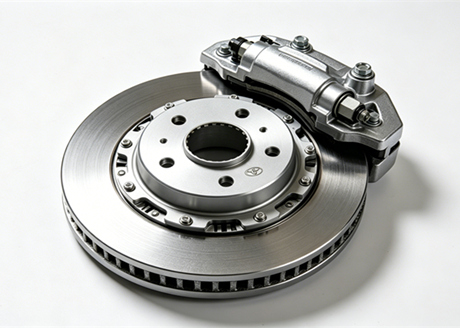
Early in the morning, a Toyota Corolla pulled into the shop. The car owner immediately asked the mechanic to take it for a test drive, as there was an abnormal noise when applying the brakes. During the test drive, the mechanic confirmed the brake noise was present. The sound came clearly from the right front wheel, while the left front wheel produced barely any noise at all. After getting out of the vehicle, the mechanic inspected both the left and right front wheels and noticed two obvious abnormal signs: First, the inner side of the right front wheel rim was covered in black brake dust, whereas the left rim had none. Second, the surface of the right front brake rotor was uneven with a distinct rough texture when touched by hand, while the left front brake rotor was in normal condition. We’ll show four comparison photos to reconstruct what we saw on site. The picture below shows the right front wheel with a heavily blackened inner rim. Upon examining the brake rotor, numerous linear scoring marks can be seen across its surface, indicating an abnormal condition. The picture below shows the left front wheel. There is no noticeable black brake dust on the inner side of the wheel rim. Take a look at its brake rotor; the surface is smooth, which is the normal condition for a brake rotor. After seeing these conditions, the mechanic told the owner straight away that there must be an issue with the right-side brake system, and the tire needed to be removed for further inspection. After the car owner agreed, the mechanic proceeded to remove both the right and left front wheels. The wheel on the left in the picture below is the left front wheel, and the one on the right is the right front wheel. The contrast on the inner rims is stark: the right rim is covered in thick black brake dust. Let’s go over a basic automotive principle first. Vehicle braking works by two brake pads rubbing against the rotating brake rotor sandwiched between them. The friction generated slows the car down or brings it to a complete stop. As mileage accumulates, both the brake pads and brake rotor will wear thin over time. It is normal for brake pads to wear down much faster than the rotor. Let’s examine the brake assembly of the right front wheel: The brake pad on the outer side of the brake rotor, marked by the red arrow, has turned dark black and is nearly worn down to its wear limit. The inner brake pad, indicated by the green arrow, still retains a substantial thickness. The yellow shaded area refers to the brake rotor; the holes drilled in its center serve for heat dissipation. The uneven wear of the brake pads shown in the picture above is a typical case of one-sided brake pad wear. Now look at the brake assembly on the left front wheel in the picture below. The brake pad pointed out by the green arrow still has plenty of thickness, which is the normal standard thickness. The mechanic explained that the root cause of uneven brake pad wear lies in the caliper slide pins hig...
Read More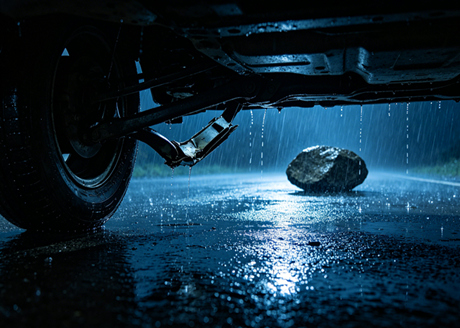
The mechanic already knew why this Volkswagen Polo was coming in before the car even pulled up to the shop — it almost certainly needed chassis repairs. How did he figure it out so quickly? As the vehicle rolled over the speed bump at the shop entrance, the chassis let out loud, distinct creaking noises. The squeaky creaks even echoed from the undercarriage the second the driver stepped out of the car, with the sound clearly originating from the front-left side. The owner said this creaking chassis noise had been there for a long time. There used to be no such abnormal sound, and he asked the mechanic to lift the car up to check if there was something wrong with the lower control arm or related parts. After the mechanic hoisted the vehicle and inspected the undercarriage, he immediately identified the source of the strange noise. As shown in the picture: the position pointed by the right arrow is where the abnormal sound originates, while the left side displays the normal condition. The mechanic is checking the assembly with a pry bar. Let’s first take a look at the intact lower control arm. The image below shows the right-side unit. Its bushing is mounted onto the subframe, with contact only at the bolt fastening points and no contact anywhere else. Now compare the faulty front-left lower control arm. As highlighted in the red area in the picture below, the subframe mounting position for the lower control arm bushing is severely deformed. You can see direct metal-to-metal contact between the subframe and the lower control arm itself. When the vehicle travels over bumpy roads, the lower control arm shifts, creating creaking sounds at the contact point with the subframe. The mechanic asked the car owner whether the chassis had suffered any heavy impact or scrape before. After a moment’s thought, the owner recalled: “I remember now. One rainy night a while back, the undercarriage hit a large rock on the national highway. I felt the jolt sharply inside the car and feared serious damage. Since the car drove normally afterward, I ignored it. I never expected the subframe got scraped and deformed back then!” So how should this be repaired? The mechanic explained that judging from the impact area, both the subframe and lower control arm are deformed, which means the chassis alignment geometry has shifted. The proper repair solution is to replace the entire subframe, though this comes with a fairly high cost. After hearing the repair quote, the car owner hesitated. Since the replacement subframe was out of stock for the time being, he asked the mechanic to lower the vehicle so he could head home and think it over. Let’s also take a look at the rear suspension. As shown in the picture below, it is a torsion-beam semi-independent suspension with no faults found during inspection. An inspection of all four wheels revealed no defects. The mechanic told the owner that the Volkswagen Polo has a low ground clearance, typical of ordinary sedans. Drivers need to ...
Read More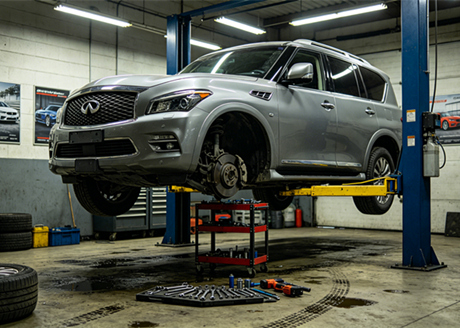
A rare off-road SUV just rolled into our shop — the Infiniti QX80. Infiniti is Nissan’s premium marque, much like Lexus under Toyota. This is a 2013 model year vehicle, an older full-size SUV fitted with a 5.6-liter front-mounted engine and four-wheel drive system. Manufactured in May 2014, it has covered nearly 180,000 kilometers. Its exterior remains in fantastic shape; you’d never guess it’s a 12-year-old vehicle just by looking at the bodywork. Our technician told us this is a fully imported model. Back when it was brand new, its MSRP stood at 1.528 million RMB, and the all-in on-road price was even higher. While performing routine maintenance, we’re taking a quick look at the current condition of its chassis. Starting with the tires: they are sized 275/50 R22, considerably larger than the tire sizes fitted to most regular passenger vehicles. Let’s take a look at the chassis. The picture below shows the full undercarriage shot from the rear of the vehicle. You can clearly tell that the chassis of this authentic off-road SUV is vastly different from that of ordinary family cars. It adopts a body-on-frame construction, meaning the body and chassis frame are separate components, with an extremely rugged ladder frame. Now let’s check the rear suspension. Officially, it’s a double-wishbone independent suspension, but its design differs from the regular double-wishbone setups we usually see—it’s essentially an upgraded version. Look at the middle section of the chassis. The drive shaft runs right at the center. On the left sits a large fuel tank with a 100-liter capacity, and the exhaust pipe is on the right. Both the fuel tank and exhaust pipe are surrounded by the vehicle’s ladder frame on their outer sides. Take a look at the front section of the chassis. It also comes equipped with double-wishbone independent suspension. After a brief inspection of the chassis, the technician stated there were no issues at all, and its condition is nearly identical to that of a brand-new vehicle. Now let’s go over the service items scheduled for this vehicle. It’s due for a major service, which includes replacing engine oil, oil filter, transmission fluid, transmission filter, power steering fluid, transfer case fluid and differential fluid. The brake fluid and coolant were replaced two years ago, so they won’t be changed this time. As shown in the picture below, this is what it looks like after removing the transmission oil pan. You can see the transmission valve body, and the filter screen is located at the bottom. The picture below shows the transmission oil pan. It’s made of steel and fitted with two magnets that trap metal particles suspended in the transmission fluid. The fluid drained from the transmission is shown below, totaling more than four liters. We removed the drain plug on the front transfer case. The drained transfer case fluid is still relatively clear, yet plenty of metal shavings have stuck to the drain plug. Run a finger over it lightly, an...
Read More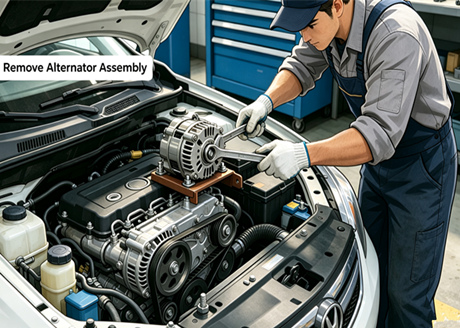
A driving school’s Volkswagen Santana pulled into the shop. As the coach stepped out, he told the mechanic, “The car ran perfectly fine this morning, but something’s wrong this afternoon. The AC isn’t blowing cold air like it was earlier, lots of warning lights lit up on the dashboard, and the steering wheel even locked up just now—it’s really strange.” The mechanic asked the coach to turn on the AC while he inspected the engine bay. The low-pressure AC pipe felt cold, meaning the compressor worked fine. But the cooling fan spun too slowly; it should run at high speed to dissipate heat when the AC is on. The engine also shook violently. Glancing at the dashboard, the mechanic saw plenty of yellow and red warning lights illuminated. Connect the diagnostic computer, and the trouble codes shown in the picture appear. The mechanic explained all the faults indicate low voltage. The vehicle’s power supply comes from the battery and the alternator, and the battery gets its charge from the alternator. It is highly likely that the alternator is defective. The mechanic grabbed a multimeter right away. With the engine running, he connected its probes to the positive and negative terminals of the battery to test the charging voltage of the alternator. The normal reading should be above 13 volts, yet the measured voltage was only 10 volts. What does this mean? It must be the faulty alternator!” the mechanic said. He then decided to remove the alternator, as shown in the picture below. The mechanic said he would take the alternator apart to show the driving coach exactly where the fault lay. The picture below shows him removing the rear plastic cover of the alternator. After taking off the rear plastic cover, the faulty component came into view, marked in the green area in the picture below—the contact point between the carbon brushes and the rotor. The mechanic pointed out abnormal wear on both the rotor shaft and the carbon brushes. The carbon brushes suffered abnormal wear, as seen in the picture below. The one on the left is almost completely worn down. Check the contact area between the rotor and carbon brushes: deep grooves have formed from wear. The mechanic explained that if this rotor surface were less worn, only replacing the carbon brushes would suffice, but now the entire assembly needs to be changed. “Does that mean a brand-new alternator has to be fitted?” the coach asked. The mechanic replied a used second-hand unit would work fine. The driving school had several scrapped cars of the same model. The picture below shows the alternator fully installed. The mechanic then started the engine and cleared all the trouble codes, and everything worked perfectly afterward. Seeing this result, the coach said he never realized how vital the alternator was and that insufficient charging could trigger so many malfunctions. The mechanic explained: "When your car first arrived, the alternator had already stopped generating electricity even though it looked inta...
Read More
Yesterday afternoon, a Toyota rolled into our shop. The mechanic took one glance at its exterior and immediately commented that this was another timeless classic—the 13th-generation Crown, the last domestically produced rear-wheel-drive V6 Crown sold in China. Per the technician, this unit is the 2010 model, manufactured in 2012, paired with a 6-speed automatic transmission. It carries the S200 chassis code and is powered by a 2.5L V6 front-engine rear-wheel-drive powertrain. Back in its day, it competed head-to-head against the Audi A6L. The owner brought the Crown in for an engine service and a full vehicle inspection. After examining the undercarriage, our mechanic couldn’t help but praise it:This is what a dependable vintage classic should be!Let’s take a closer look at this 2010 Crown through a series of photos. First up, a quick tour of the engine bay. It comes fitted with plenty of shielding panels. The top of the engine features a silver cover etched with the V6 badge, signifying its V-six cylinder layout. The engine runs remarkably smoothly, with plastic trim covers lining both sides. The dashboard shows almost 250,000 km covered across 14 years on the road. The mechanic explained that inline-six and V6 engines are typically longitudinally mounted. Combined with rear-wheel drive, the engine oil drain bolt sits toward the rear, and there’s no skid plate beneath the oil pan, so the bolt can be easily accessed for oil changes. The damp shield panels are just wet from air conditioning condensation dripping onto them. Judging by the condition of the drained engine oil, it’s definitely overdue for a change. Up front sits a double-wishbone independent suspension. Its lower control arm is constructed from double-layer steel, with the shock absorber and stabilizer end link mounted onto it. The steering knuckle is made of aluminum alloy. The upper part of the steering knuckle connects to the upper wishbone, which is also made of steel. After inspecting all these front suspension components, we found them in excellent condition. Moving to the middle section of the chassis, the exhaust pipe runs through the center, fitted with heat shields above it. The drive shaft sits directly over the heat shields. Protective undertrays line both sides of the exhaust, concealing the brake lines and fuel hoses inside. At the rear of the chassis, exhaust mufflers are fitted on both sides of the tail section. The rear suspension adopts a multi-link independent setup. The rear differential is mounted on the subframe. Made of steel, the differential has surface rust all over it. The mechanic said this is completely normal; aside from looking unsightly, it has zero impact on performance. The rear multi-link suspension consists of five steel control arms. Surface rust on these components is completely normal, and all of them remain original factory parts. The rear steering knuckle is made of aluminum alloy. After completing the chassis inspection with no issues found, t...
Read More
READY FOR A SUBSCRIPTION?
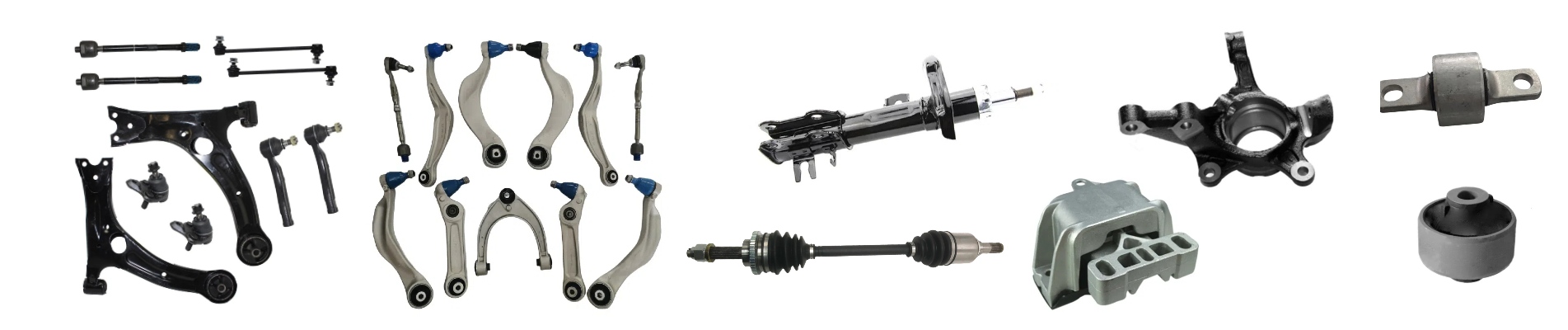
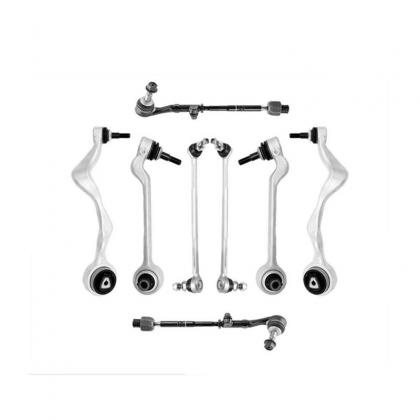
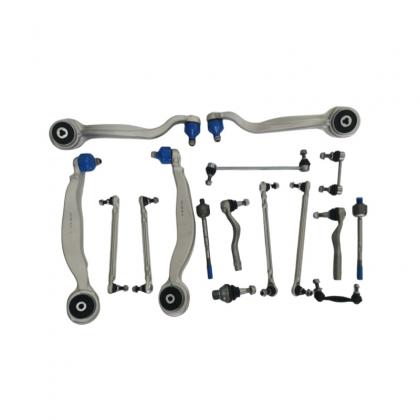
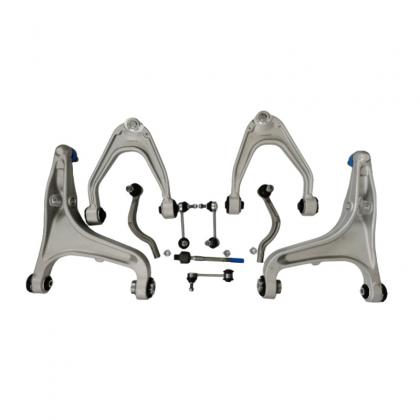
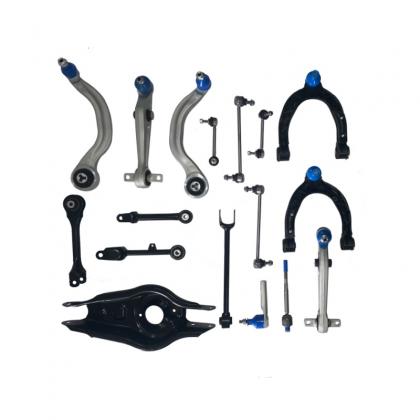
SMK company supply auto parts for below car aftermarket parts: Japanese car: Toyota, Honda, Nissan, Mazda, Subaru, Mitsubishi, Suzuki, Isuzu... European car: BMW, Benz, VW, Audi, Skoda, Porsche, Maserati, Renault, Peugeot, Citroen, Fiat, Opel, Land Rover... American car: Tesla, Ford, Chrysler, Cadillac, Buick, GMC, Chevrolet, Lincoln, Fiat, Dodge, ... Korean car: Hyundai, Kia, Daewoo... Chinese car: Chery, Geely, GreatWall, Haval, BYD, Changan, JAC... We supply parts worldwide: USA, Canada, Europe, Mexico, Colombia, Korea... We are leading supplier for below auto parts: Suspension & Steering Parts(Control Arm, Steering Tie Rod, Stabilizer Link...) Tesla Aftermarket Parts. Engine Mounting/Transmission Mount SMK Auto parts is specifically designed for the automotive repair parts. Our chassis components undergo rigorous testing to easily withstand the complex and variable road conditions and climate. The products not only offer exceptional durability but also provide broad compatibility and excellent stability, ensuring long-term, reliable support for your vehicles. Many overseas clients have established long-term partnerships with us. With the continuous accumulation of customer resources, many overseas clients entrust us with the production of various types of automotive parts products. In order to meet the diversified needs of customers, we have actively expanded new product lines. We adhere to high manufacturing standards, ensuring each product meets the strict safety and durability requirements of different markets. We invite customers from worldwide to choose our products and provide stronger protection and performance upgrades for your vehicles! SMK always adhere to customer-centric, continuously improve product quality and service levels, and strive to create greater value for global customers. In the future, we will continue to adhere to the principle of “quality first, customer first” and work hand in hand with our partners to create a better future. Working Room Packing & Delivery Need After‑market Auto Parts or add your personal brand? We supply high‑quality chassis parts and customized services to meet your order requirements. Get A Quote →
 IPv6 network supported